Buying fresh fruit is kind of like gambling, right? You throw down a huge chunk of cash on what looks like a promising pile of fruit, only to get home and discover—oh, no. That peach is mealy, those strawberries are molding beneath the perfect ones on top, and that pineapple? Sawdust inside. And if you have kids? Forget it. You finally get them to eat a piece of fruit, and it turns out to be the one weirdly sour plum that ruins fruit for them until, who knows, next summer.
Anyway—there are a ton of hacks people swear by for picking better fruit! Sure, some of them are nonsense. But a lot of them are actually helpful if you pay attention. Honestly, it’s worth writing down or memorizing a few if you’re someone who gets burned by fruit roulette on the regular.
Watermelons
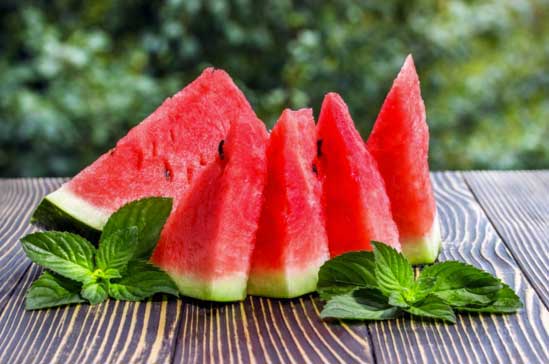
So, watermelons. Big, heavy, mysterious. They’ve all got those pale, yellowish blotches on one side of them, and if you’re new to the watermelon game, that looks a little scary. But those are called field spots. That just means the watermelon was sitting on the ground while it grew. The more golden, or creamy-yellow that spot is, the better. While focusing on these good signs is great, it’s equally important to know how to spot a bad watermelon from its tell-tale warning signs. Like, if it’s on the whitish side? Meh. But if it’s heading into an orange-yellow color, then you’re looking at one that probably had a good, lazy time sitting in the sun and ripening.

And then, there’s the webbing. You know, that spider-web looking brown scarring, that a number of melons have? This is surprisingly a good thing! Supposedly it means the bees have gone to town on the flower, thereby producing an over-abundance of pollination, which should theoretically yield some percentage sweetness. More webbing means more pollination, which equals more sweetness? I cannot explain the biology of it, but it seems to work.
Also, and this one always trips people out: watermelons are “boy” or “girl.” Yes, and I know, it sounds like grocery store astrology, but the rounder ones (the “girls”) are said to taste sweeter and the oblong ones (the “boys”) are likely to be more watery. I don’t know if it’s been peer-reviewed or any of that fun stuff, but I’ve had enough old-timers swear by it that I’m not going to dismiss it.

Oh—and this one’s actually useful if you’re looking for a watermelon: look at the stem, or what is left of it. If it’s still green, it probably had to come off too soon. The brown and dried-up tails have had ample time to ripen properly before coming off the vine—those are the ones you want. Not the largest one. Not the shiniest. It just has to be the right size, with the right spot, and that dried little tail.
Pineapples

Now, pineapples are tricky. You would think that the more bright and yellow it is, the more ripe it is, right? Wrong. That’s sort of the trap. The only rule is that it can’t be super green. That is the only red flag, honestly. If it’s too immature, it’s also probably going to be sour and kind of dry in the middle.
Folks tend to also pluck on the center leaves to check the ripeness; this is not a bad method, but there is a sweet spot. If you give it a slight tug and it comes out easily with a bit of resistance, you’re fine, but if it slides out without any downward pressure (that is what I mean by no resistance) it might be overripe and mushy in the middle. Basically, if it comes out like it wants to shed its leaves, it is probably beyond fresh.

Okay, next, give it a squeeze; not a squeeze like you’re juicing it, just a gentle push. If it is rock solid, not ready. If it feels like a soft stress ball? Also not good. You want it with a little give, like almost a bruise if you were really trying, but is still presentable.
And now I’m going to give you a weird, and arguably the most reliable test: smell the bottom. Seriously. Flip it over and get a whiff. If it smells like a sweet, fresh pineapple? It’s probably ripe. If it doesn’t smell like anything? It’s not ready. And if it smells too sweet—like, sickly sweet, or syrupy? It could be starting to ferment in there that’s bad news bears.
Cantaloupes

These are a bit easier if you know what to look for, but frankly they are the one I make the most mistakes with by far, for whatever reason. Initially, you want to look for any clear damage. Not just scratches but more like bruises or anything moldy or mushy. If it is already growing something, you can simply put it down.
Next is to examine the skin color. If there is still green color present, you probably want to wait on it. You want something that is in the beige, tan color range with a slight hint of green, that’s good. Too much green means not ripe, too pale and soft means most likely overripe.

Weight matters as well. Pick up a few melons and see which one feels heavier than you expected. Generally, the heavier ones have more juicy flesh, maybe they are just tightly packed, who knows. Whereas lightweight cantaloupes are usually dry, and dry cantaloupe is the saddest type of cantaloupe.
Okay, so now you flip and press the bottom, where the blossom end was. You do not need too much pressure. If it gives a little this is probably what you want to see. If it’s too soft? Like your thumb leaves an indent? This is probably soft and mushy on the inside.
And finally, yes you should smell it. Like a pineapple, the nose knows. A cantaloupe that smells faintly sweet is probably at peak ripeness, but if it smells too strong or stanky-bad in that overly sweet sense, it may be going bad. If it smells like melon liqueur? Avoid it.
So, I guess that is sort of the short version of what to examine with these fruits. Like I said, it is not rocket science, but once you have learned to recognize a couple of little things, like how it smells, how it feels, what kind of weird scarring it has, you will get better at getting some good ones. This obviously won’t guarantee your kid is going to love fruit, but at least when they agree to take a bite, you won’t be handing them a complete dud.