
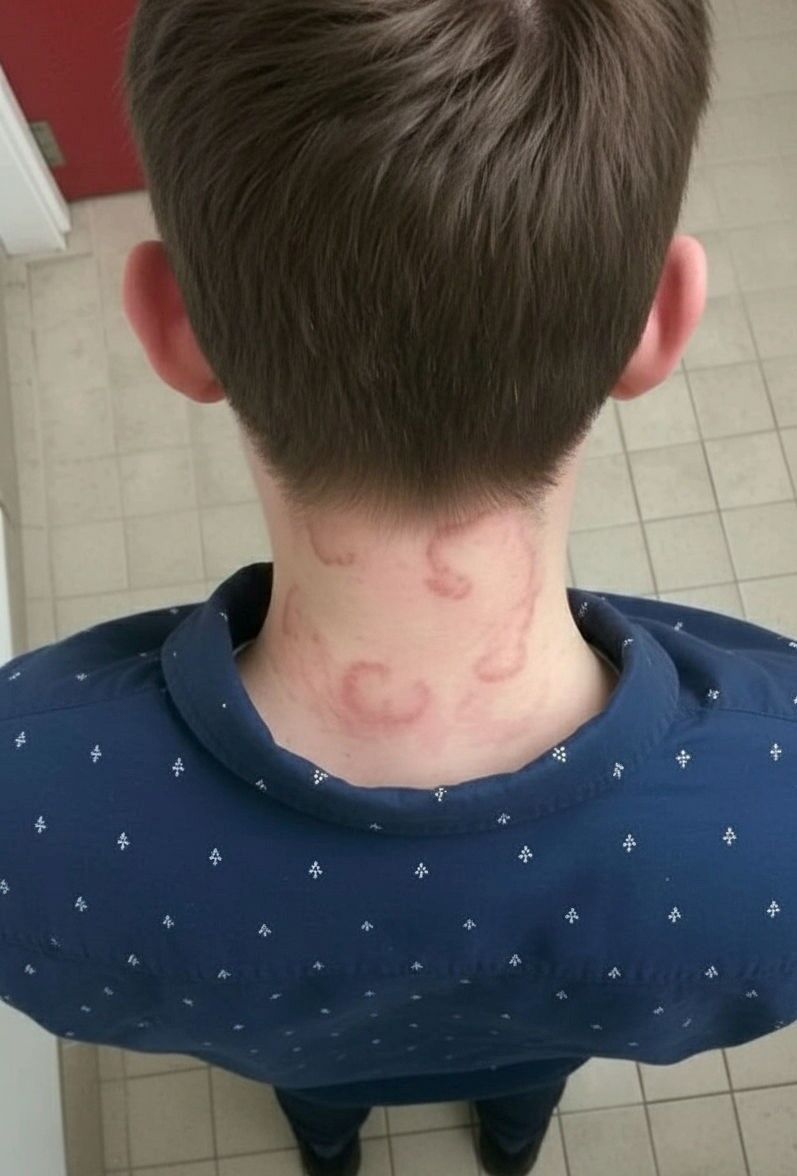
His skin didn’t just itch—it burned. Red, swollen patches erupted across his body, vanishing and reappearing like a cruel game. At first, it seemed like an allergy. Then doctors said one word that changed everything: urticaria. The hives spread, his lips swelled, and breathing felt tighter. That’s when they realized this wasn’t jus…
What began as a harmless itch became a frightening lesson in how aggressive urticaria can be. Those raised, red weals weren’t just a surface problem; they were the visible sign of mast cells releasing chemicals into his bloodstream, flooding tiny vessels and forcing fluid into his skin. Soon, deeper swelling—angio-oedema—distorted his lips and eyelids, turning discomfort into genuine fear, especially when swallowing became difficult.
Doctors raced to identify triggers: foods, medications, infections, even stress. Was it acute urticaria that would fade in weeks—or chronic, the kind that lingers without explanation? With antihistamines, short steroid courses, and soothing menthol creams, the flare-ups slowly came under control. He learned to listen to his body, avoid known triggers, and never ignore swelling around the face or mouth again. What once felt like “just hives” became a reminder that skin reactions can signal something far more serious—and that timely treatment can quietly save a life.